Posts

Showing posts from May, 2022

116. Spirituality Simplified
Image
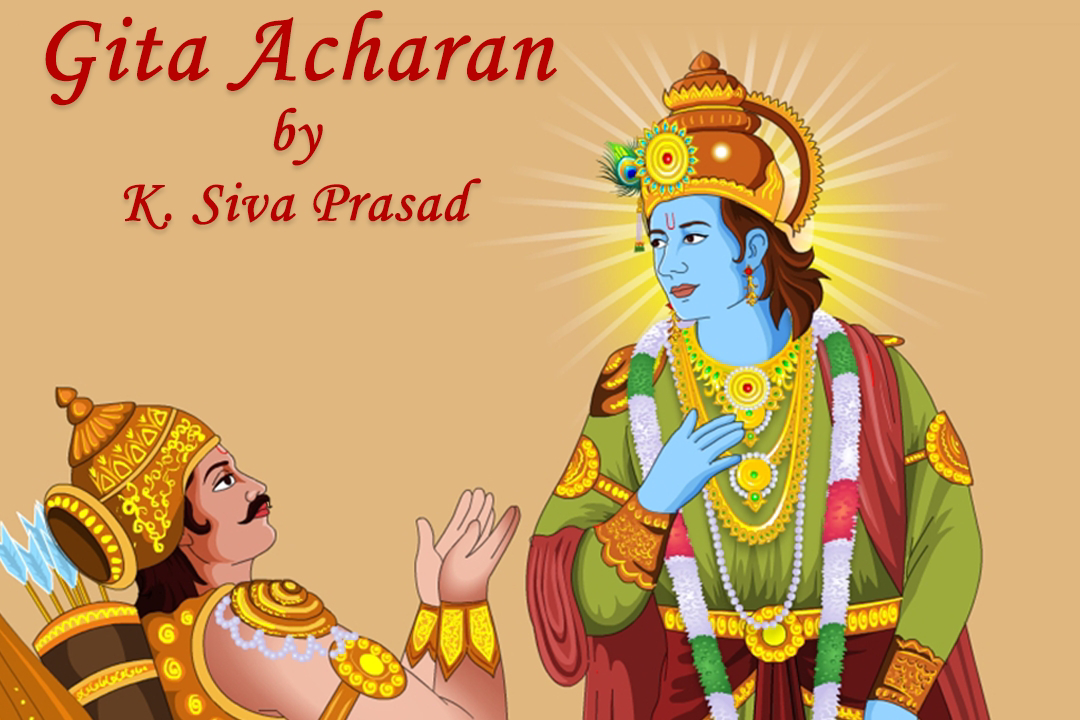
T he common belief we all have about the spiritual path is that it is difficult to follow. Krishna earlier assured us that small efforts bring big gains in karma yoga (2.40). He further makes it simple when he says, “He who appropriately ( yukta ) eats, relaxes, works, sleeps, and remains awake will find yoga as the destroyer of suffering” (6.17). The y oga or spiritual path is as simple as eating when hungry; working when it is time to work; sleeping when it is time to sleep and relaxing when tired. Anything more than this is a story that we tell ourselves and others. A baby requires more sleep than an old person. Our requirements regarding food may vary depending on the physical activity of the day indicating that ‘appropriately’ means being aware in the present moment. The same was earlier referred to as the bounden duties (6.1) and also as obligatory actions (3.8). On the contrary, our minds extrapolate from simple facts and add our imagination to knit complex sto...

115. A Method of Meditation

Image
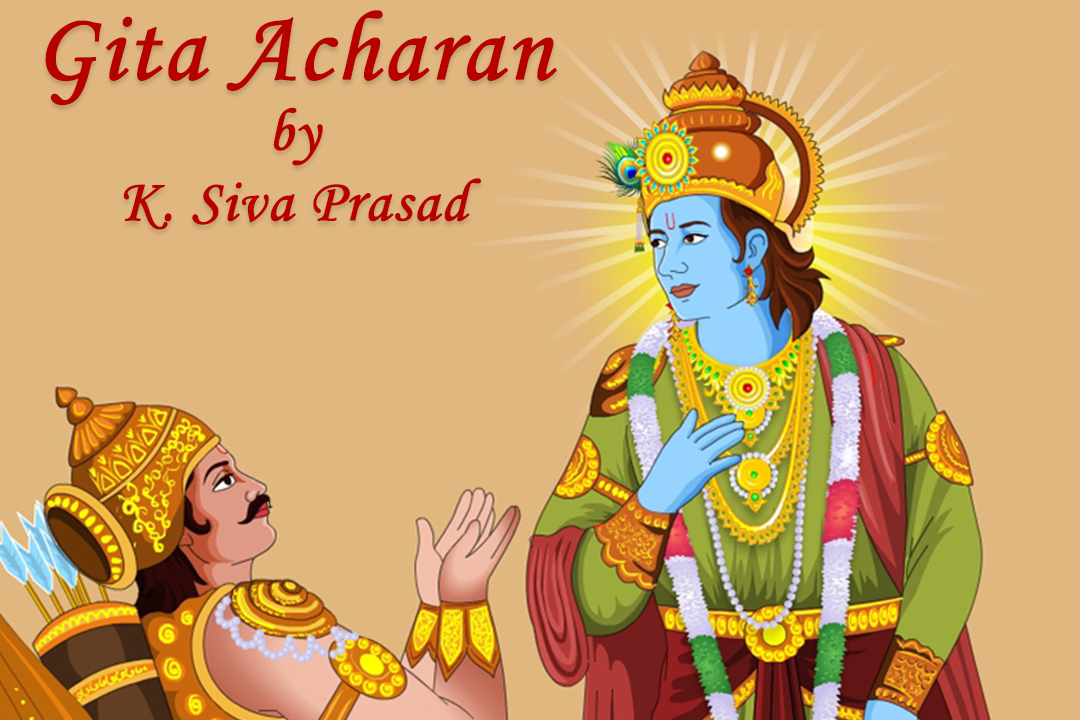
K rishna says you are either your own friend or your own enemy (6.6). To become one’s own friend, he advised the path of equanimity towards the feelings of sukh-dukh (6.7), towards things like gold, stone (6.8) and people like friends-enemies (6.9) by controlling senses (6.8). Alternatively, Krishna suggests the path of meditation (6.10-6.15). Krishna says to remain secluded, devoid of material possessions (6.10); to sit in a clean place, neither too high nor too low (6.11); with mind-controlled, back and neck erect, gazing at the tip of the nose, without looking around (6.12-6.13); be quiet, free from fear, remain concentrated (6.14); and that by constantly seeking union with the Self, one attains supreme peace (6.15). Attaining samatva becomes difficult with the onslaught of sensory stimuli and thus seclusion gives temporary relief. On the other hand, even if we seclude ourselves physically there is a chance that we keep mentally taking our relationships, profession...

114. Avoiding Extremes.

Image
K rishna spoke about treating gold, stone and a handful of soil as equal (6.8). He further said that he who has equal regard for the patrons, strangers, relatives, friends, enemies, meditators, hateful beings, righteous and ungodly, is the best (6.9). Krishna started with things and suggested treating them as equals. Then He moved on to people in our lives and told us to regard friends and enemies; righteous and ungodly; strangers and relatives as equals. A closer look would indicate that these are all labels we assign to the people around us and our behaviour towards them would be based on this labelling. Interestingly, a friend to us can be an enemy to another person and a friend today can become our enemy tomorrow which indicates that all these labels are situational or biased. Hence, Krishna suggests treating them as equals by dropping these labels. The subtle message regarding things, people and relationships is not to treat people and relationships as consumables....

113. Accepting ‘As it is’

Image
K rishna says, “The yogi , who is satisfied with jnana and vijnana ( jnana-vijnana-tript-atma ), who remains unshaken, who has conquered the senses, to whom a lump of earth, stone and gold are the same, is said to be realised one” (6.8). Understanding the meanings of awareness, curiosity, knowledge and experience will help us comprehend what Krishna said. Jnana is awareness about self, and one is content when one attains it. Vijnana , also called science, can be interpreted as curiosity about things and people. A collection of all these curiosities along with their answers is nothing but the knowledge which is always of the past and is available in books. Curiosity is helpful in the initial stages of the internal journey but has got its limitations. Even science had to accept these limitations such as the principle of uncertainty and dualities regarding particles and waves. On the other hand, existence keeps constantly evolving. Curiosity looks for answers, but exist...