115. A Method of Meditation

Krishna says you are either your own friend or your own
enemy (6.6). To become one’s own friend, he advised the path of equanimity
towards the feelings of sukh-dukh (6.7), towards things like gold, stone
(6.8) and people like friends-enemies (6.9) by controlling senses (6.8).
Alternatively, Krishna suggests the path of meditation (6.10-6.15).
Krishna says to remain secluded, devoid of material possessions (6.10); to sit
in a clean place, neither too high nor too low (6.11); with mind-controlled,
back and neck erect, gazing at the tip of the nose, without looking around
(6.12-6.13); be quiet, free from fear, remain concentrated (6.14); and that by
constantly seeking union with the Self, one attains supreme peace (6.15).
Attaining samatva becomes difficult with the onslaught of sensory
stimuli and thus seclusion gives temporary relief. On the other hand, even if
we seclude ourselves physically there is a chance that we keep mentally taking
our relationships, professions and situations along with us to meditation. This
verse (6.10) states that we should be able to leave the identification with
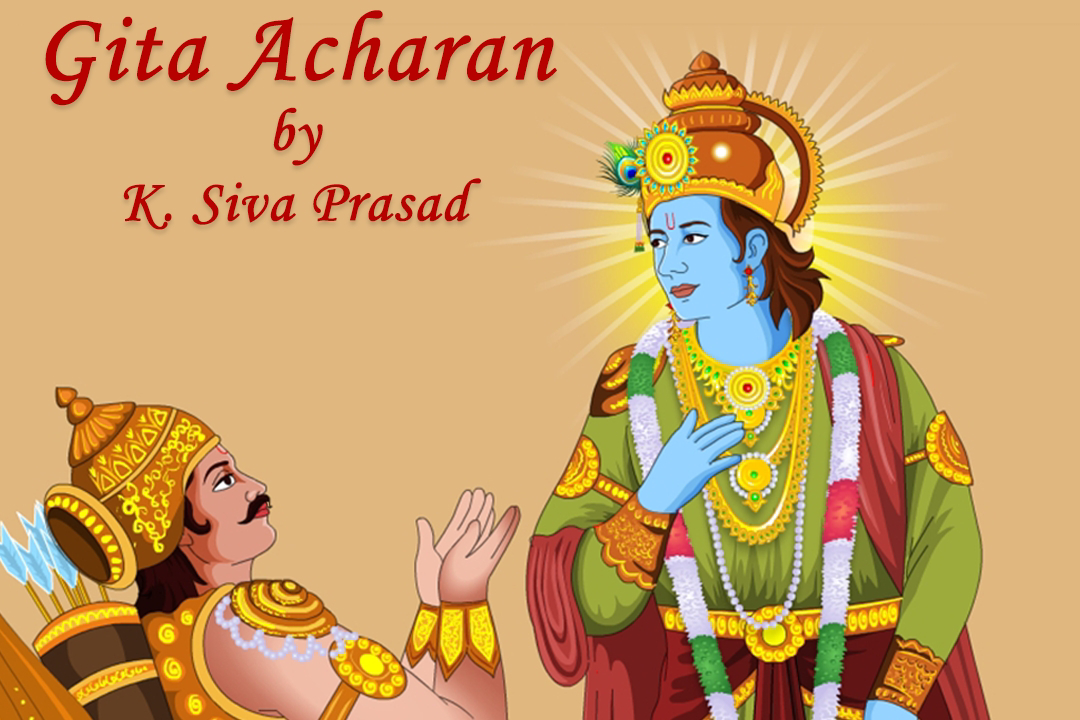
them at mental level to remain secluded. It’s like Arjuna attaining mental
seclusion even in the midst of war.
As far as shedding material possessions is concerned, it does not mean
donating all our physical possessions like car or house before going into
meditation. It is about breaking our mental attachment to them and viewing them
as things to be used when needed. It’s about not making them a part of the ‘I’.
Finally, Krishna advises shedding fear. Our fundamental fear is the fear of
losing things or people. This loss is nothing but the partial demise of the ‘I’
as we lose a part of ourselves. On the other hand, in meditation, we must shed
thoughts, the sense of ownership over things and remain secluded from people.
Hence, Krishna cautions us to be aware of this aspect of fear on the path
towards attaining an eternal meditative state which is moksha.


Comments
Post a Comment