44. What is Ours and What is Not
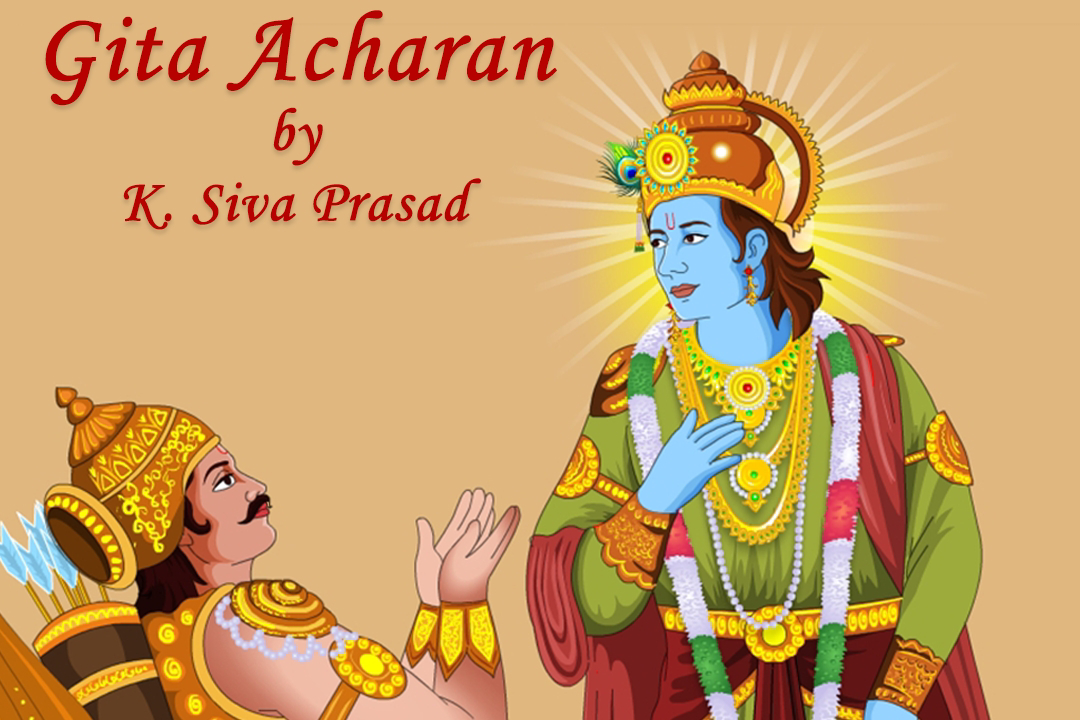
Krishna says that when we overcome moha-kalilam
(darkness of delusion) using intellect, we become indifferent to what is being
heard or will be heard (2.52). This implies that when we overcome moha,
the inputs brought by our senses will lose the power to influence us at will.
Krishna chose ‘hearing’ as the metaphor here as we are frequently influenced by
the words of others- both praise and criticism.
Like ahankaar, it is difficult to describe moha due to the
absence of suitable words. It is our inability to distinguish between what is
ours and what is not. It is the feeling of ownership over physical possessions,
though in truth we are not their real owners. While we try to cling to what is
not ours, we don’t have a clue about what truly is ours i.e. dehi or
atma (soul). Krishna calls this phenomenon ‘kalilam’ or spiritual
darkness.
Krishna further says that when we overcome this darkness we attain ‘nirvedam’.
Though nirvedam is described as indifference, it isn’t passive or
negative indifference which is born out of ignorance. It’s the indifference
arising out of being aware, alive and in the moment. It’s neither attachment
nor detachment, but beyond both. It is active acceptance without judgement and
labelling.
In an ‘others oriented’ life, we crave for acceptability, admiration and
praise from others for our possessions, abilities, achievements, behaviour,
looks etc. We work hard throughout our lives to get these rewarding sensations
until we can overcome moha through awareness.
Once we dispel the darkness brought by moha through balanced and
coherent intellect, the sensory perceptions lose their influence to affect us -
be it in the present moment or the future.


Comments
Post a Comment