97. Sword of Wisdom.
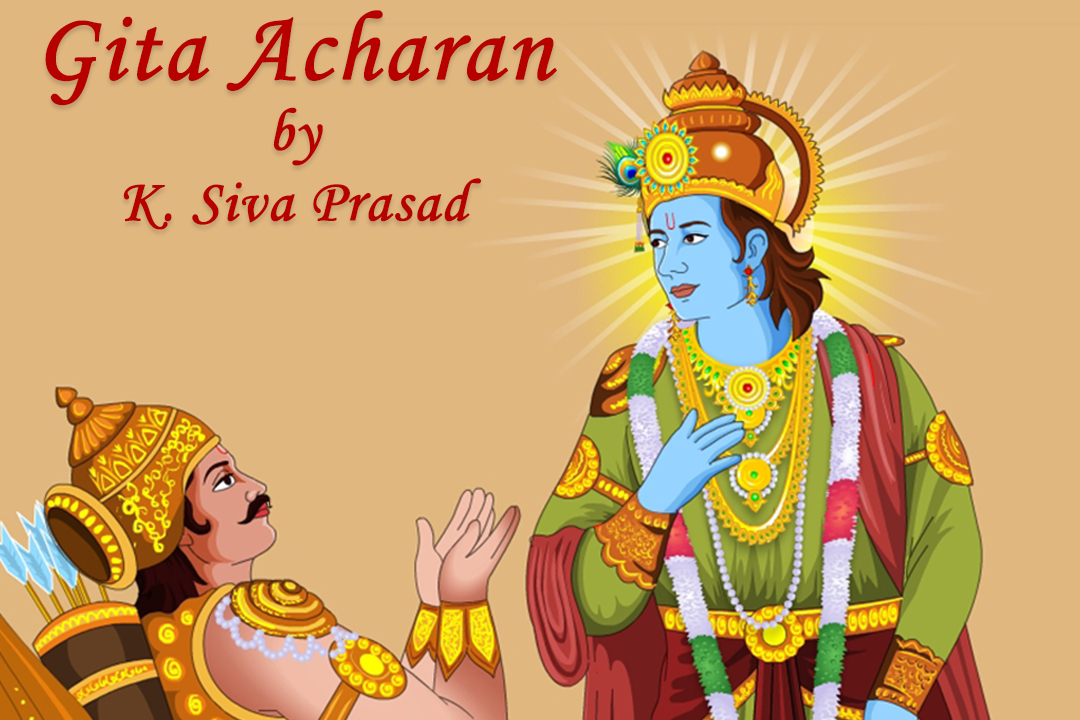
Krishna says, “He who has relinquished actions by yoga
and has torn apart his doubts by wisdom, becomes poised in the self; actions
don’t bind him (4.41). Therefore, take shelter in yoga by cutting this
ignorance-borne doubt dwelling in your heart with the sword of wisdom” (4.42).
Krishna advises us to use the sword of wisdom to free ourselves from the
bondage of action (karma bandhan).
‘Regret’ is a name for karma bandhan that binds us for both executed
and unexecuted actions which resulted in the damage of things or relationships.
Similarly, ‘blame’ is another name for karma bandhan arising from the
actions or inactions of others that affect our lives negatively. The sword of
wisdom is the instrument that helps us extricate ourselves from the complex web
of regret and blame.
The fourth chapter of the Gita is called ‘Jnana Karma Sannyas Yoga’.
It starts with how Paramatma performs karmas and goes on to tell
us that all karmas should be performed like yajna of selfless actions.
Then Krishna brings the aspect of wisdom when he says that all actions so
performed, without exception culminate in wisdom (4.33). In the title, jnana
stands for wisdom or awareness and sannyas being renunciation. This
indicates that renunciation is doing karma with awareness
Renunciation is not the path of escape or shirking responsibility by giving
up worldly things or professions. For Krishna renunciation is doing our karmas
that are entrusted to us by existence with awareness and wisdom to the best of
our ability. There is no real escape as the wisdom required for peace is within
us, waiting to be discovered.
When we are filled with awareness and wisdom, even hell becomes heaven;
conversely, an ignorant mind can turn heaven into hell. The key is inner
transformation.


Comments
Post a Comment