124. No Shortcut to Hard Work

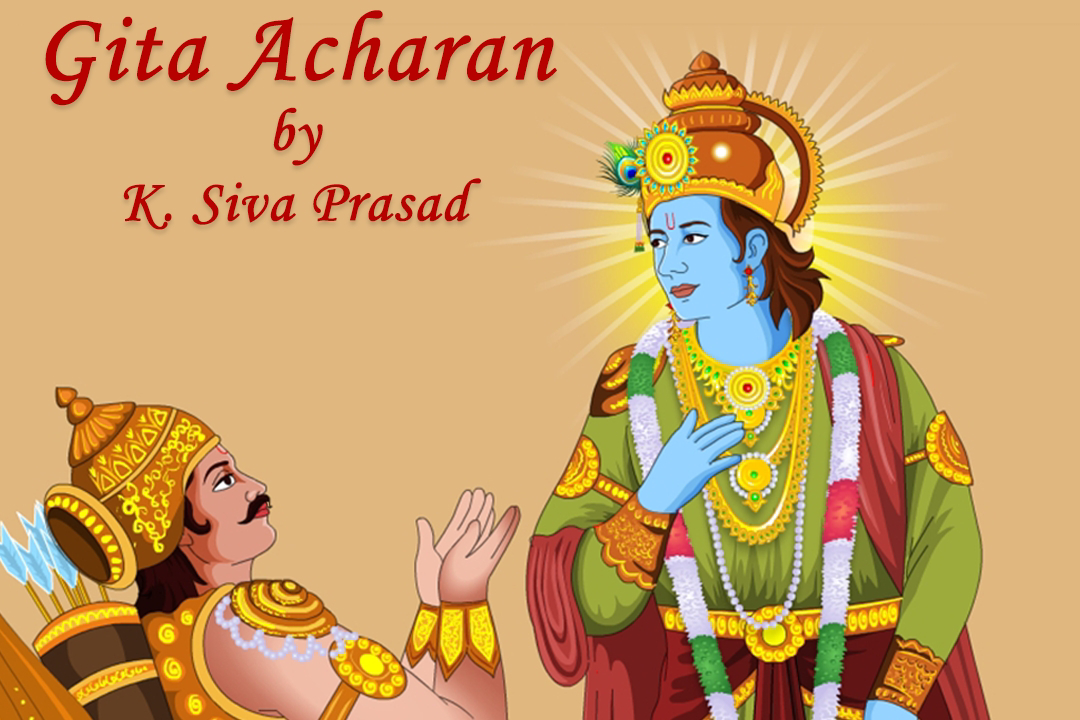
Krishna talked about establishing in oneness, whatever may
be the mode of living, to attain infinite bliss (6.28 & 6.31). There are
three major issues faced by us to attain oneness. One is that it is called by
different names in various cultures, and to compound the complexity, the paths
prescribed by these cultures appear to contradict one another. Secondly, our
mind is trained to divide which prevents us from attaining oneness. Thirdly, we
tend to reject what we don’t know and ‘oneness’ is completely new terrain for all
of us. Reflecting on these difficulties Arjuna asks how to control the mind.
Krishna says, “No doubt, the mind is restless and difficult to control, but
it can be controlled by practice (abhyaas) and dispassion (vairagya)
(6.35). Take my word that yoga is hard to attain by the ungoverned man,
but it can be attained through striving” (6.36). Krishna had earlier advised
regular practice (6.23) of controlling senses with determination (6.26) to
bring the restless mind under control.
Vairagya is the polar opposite of raag or attachment. Life
gives moments of both raag and vairagya daily but our mind practices
only raag which is chasing desires. For example, we can get frustrated
in a relationship and when it happens, we blame our partner and look for a new
relationship. We fail to recognise that a relationship (raag) itself
holds the potential for frustration (vairagya). The practice of vairagya
is nothing but the practice of controlling the senses with determination. It
rests on the realisation that we can’t attain joy from outside or from others.
Our past experiences of vairagya can deepen this realisation and helps
us stay aware when similar moments arise in the present.
Death is eternal, powerful and a master of equanimity. Many cultures use
this to attain oneness by controlling the mind as it is the ultimate vairagya
we can imagine.


Comments
Post a Comment