134. Competing with Self
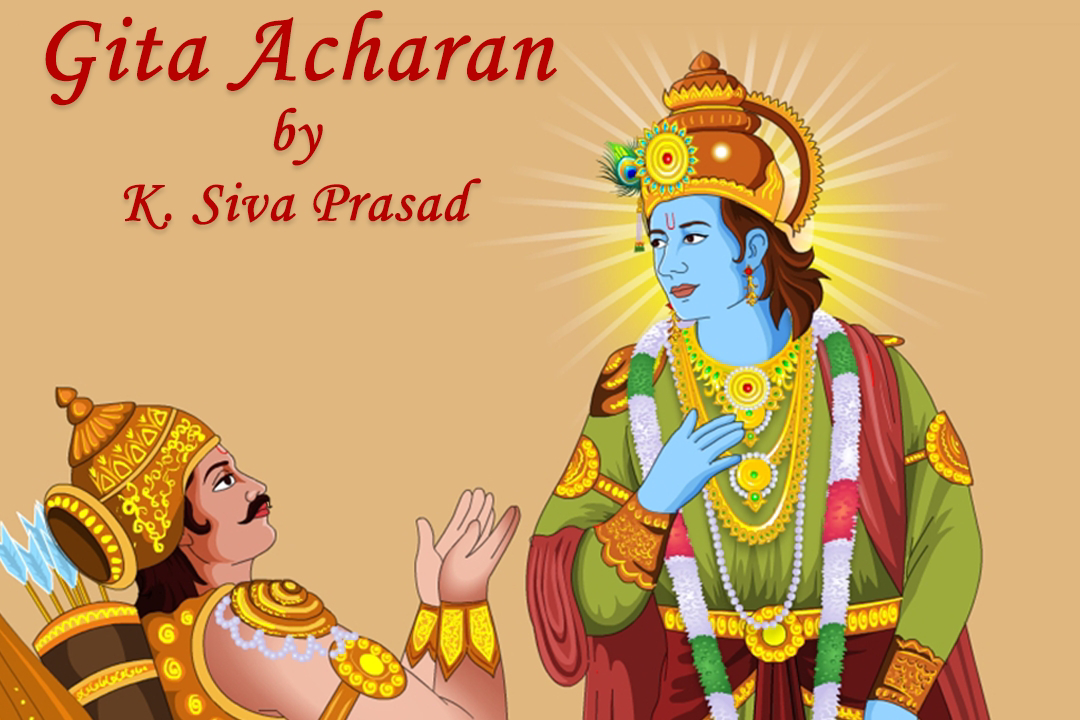
Krishna mentioned that four types of devotees worship him;
to remove their difficulties (aarta), to attain success (artharthi),
to obtain knowledge (jigyasu) and a jnani (wise) (7.16). He
elaborates about the jnani and says that the jnani who is nitya-yukta
(ever steadfast) with single pointed devotion is the best among all devotees. I
am extremely dear to jnani and he is dear to me (7.17). At the end of
many janma (births), such a person attains wisdom and reaches Me (7.19).
The phrase ‘many janma’ is usually interpreted to mean that we
should go through many births to become the jnani. Another
interpretation is also possible by taking ‘janma’ as a generic word
rather than specific to the creation of our physical body. It can be ‘janma’
of a situation or circumstance around us which is a continuous process. These
can be favourable or painful, but each of them has the potential to teach us something.
It is about how quickly we learn without getting attached to or developing an
aversion to them.
Earlier, Krishna emphasised learning through prostration, questioning and
service (4.34). These three tools can be used for every situation we face, for
people in our lives and for circumstances we are in. When approached with shraddha
(trust) each of them can become a guru (teacher). It is about making
today better than yesterday and tomorrow better than today, in terms of gaining
awareness and shedding of ahankaar by dropping comparison with others
and by competing with self.
This process can take us to a point of eternal state or moksha
(ultimate freedom) where nothing is left to know and these situations just
become dramas of joy which is the state of a jnani. The onus is on us to
attain this.


Comments
Post a Comment