148. Wise use of Energy
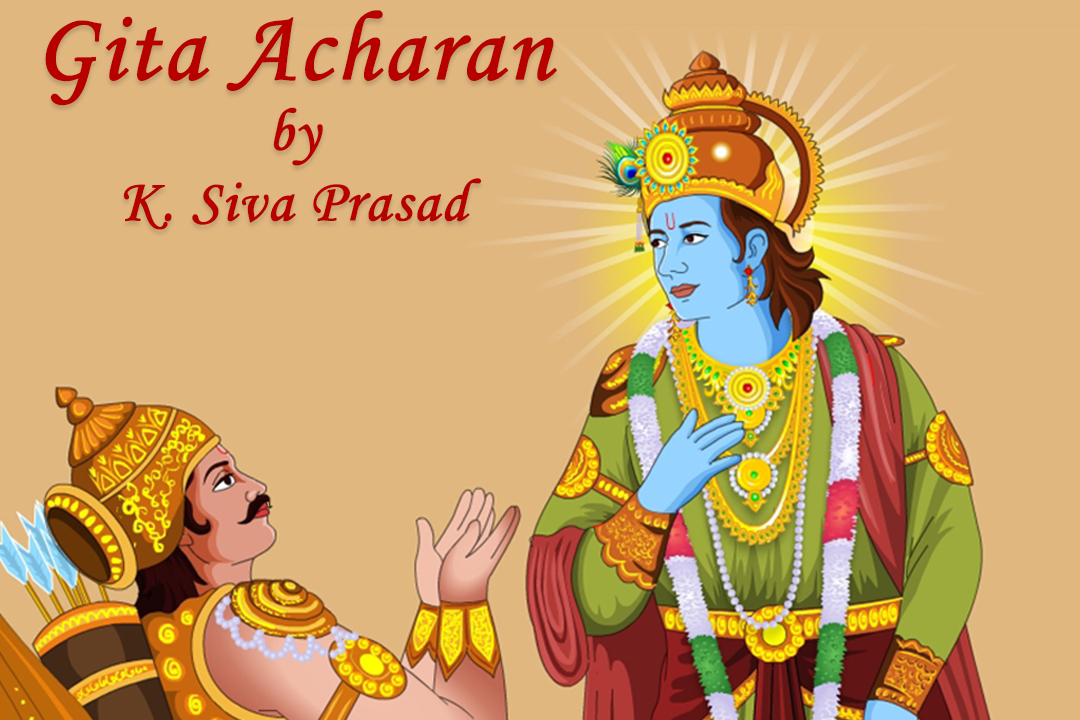
Once upon a time, two sworn enemies prayed to God. God
decided to bless them both and appeared before each of them separately. The
first wished to know what the second would ask for. When God appeared before
the second, he requested that God bless the first one first, since God had
appeared there earlier.
God then appeared
before the first. Knowing the second’s intention, the first asked God to grant
him double of whatever the second would receive. Blinded by enmity, the second
then prayed that he should lose one eye so that the first would lose both; lose
one leg so that the other would lose both legs. This spiral of mutual loss
continued.
This story illustrates a lose–lose game that unfolds when one invests
energy in hatred. That is why Krishna advises us to renounce hatred, but not
action (karma) (5.3) by inculcating the divine quality of forgiveness
(16.3). Another learning from this story is that we should wisely invest our
time and energy as these are limited at our level.
In this regard, Krishna says that there are two eternal paths which are,
the bright path of no return and the dark path of returning (8.23 & 8.26).
The bright path is the path of channelling most of our energy towards the
internal journey to reach Brahma (8.24). The dark path is channelling
our energy outside (playing lose-lose games) and one returns back (8.25).
Krishna uses various names and attributes for these paths. While the dark path
is like a pendulum swinging between the polarities of birth and death, the
bright path is to reach the pivot of the pendulum which transcends polarities
and is nothing but reaching Brahma - the Supreme.
Krishna says that once these paths are understood, none gets deluded
(8.27). This is the balanced use of time. He further says, “He who knows the
truth about the two paths gains merit far beyond any virtuous fruits (punya-phalam)
assigned to Vedas, or in sacrifices, or in penances. That yogi
reaches His Supreme Origin” (8.28).


Comments
Post a Comment