168. Shedding Sense of Entitlements.
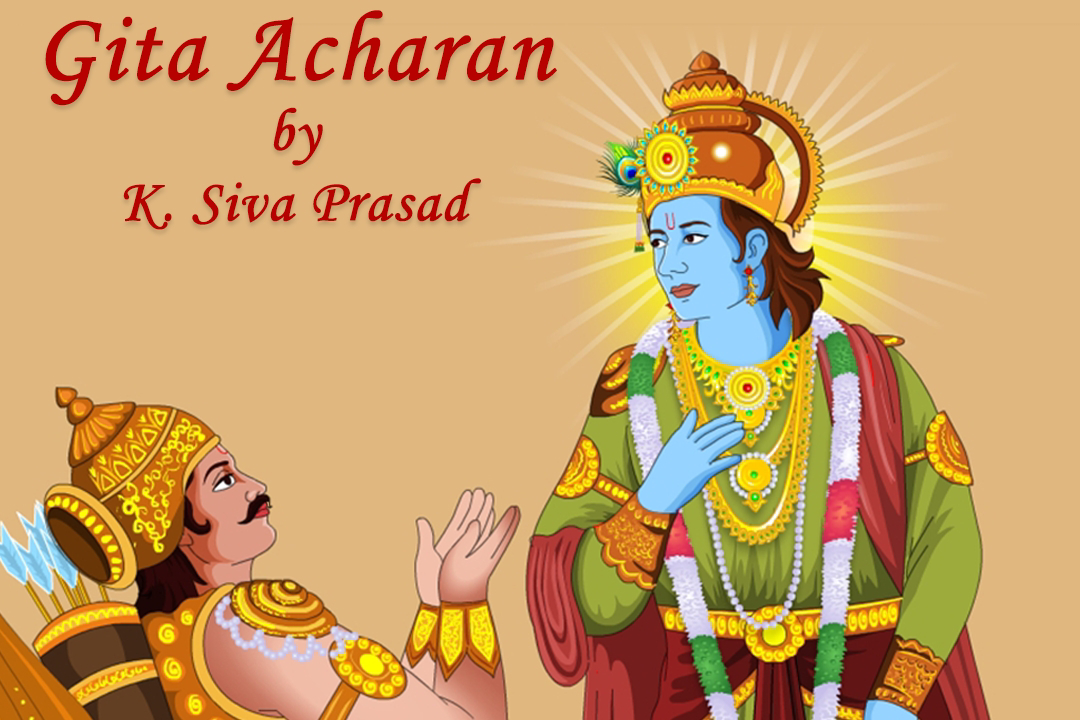
Arjuna says, “Out of compassion (anugraha), you
have revealed to me the secret wisdom (adhyatma) and my delusion is
dispelled (11.1). You have explained to me in detail about the origin and the
dissolution of beings, as well as about your imperishable greatness (11.2). You
have told me about your supreme glory, and I wish to see your supreme form
(11.3). If you think that I am capable of seeing your supreme form, then kindly
show me” (11.4).
The general belief is that His blessings are a must to overcome delusions
and attain adhyatma. This is an excuse used to avoid the difficult task
of internal transformation. If one is told to perform karma (action)
without expecting karma-phal (fruits of action) one argues that it is
not possible without His blessings. Similar argument is put forward when one is
told to transcend polarities; transcend gunas; drop the differences or
labelling to see Him around us in every living and non-living entity.
On the other hand, whoever attained adhyatma said that it happened
because of His anugraha as what they got was beyond their imagination.
This looks paradoxical. While His blessings are available to everyone, like
rain, we cannot escape the effort of keeping the bowl upright to collect them.
Krishna says, “I am equally disposed to all living beings. To Me none is dweshya
(hateful), none is priya (dear). But those who worship me with devotion
are in Me and I am also in them” (9.29).
The difference is the devotion which is like keeping our bowl upright. In
the contemporary context, ahankaar is also referred to as entitlement.
Devotion is nothing but shedding entitlements by realising that it’s all His
grace and at the same time performing karmas assigned to us in the
present moment by this mighty existence without attachment or detachment.


Comments
Post a Comment