173. Ahankaar to Nimitta-Matra
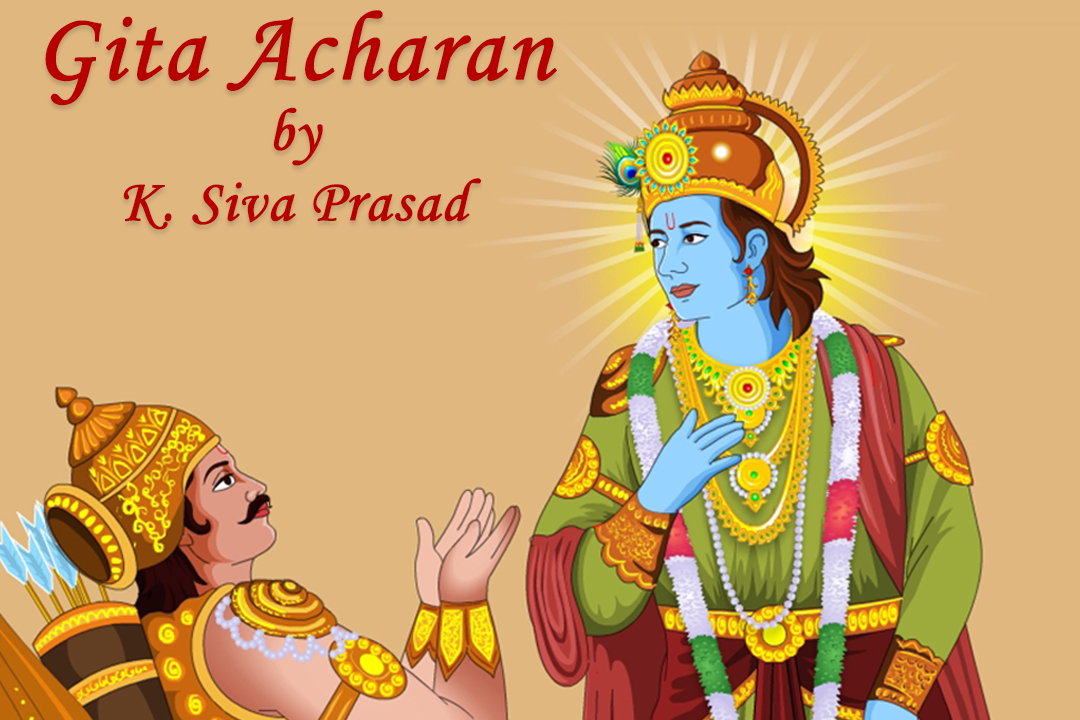
Upon seeing all the warriors getting crushed by the teeth
of Krishna’s Vishwaroop, Arjuna enquires to know more about who He
really is. Krishna says that He is the time that is now engaged in wiping out
the world and even without Arjuna’s participation none of them will survive
(11.32). He further says that your enemies are killed by Me and you are merely nimitta-maatra
(an instrument in the hands of the Almighty) (11.33). Drona, Bhishma and other
warriors have already been slain by Me, don’t feel distressed to fight the war
(11.34).
The fundamental reason for Arjuna’s distress is his presumption that he is
the karta (doer) i.e. the killer in the present context. This is aham-karta
(I am a doer) or ahankaar. He tries to justify this by saying that
killing his teachers and relatives for the sake of the kingdom is not good.
Krishna breaks Arjuna’s illusion by showing him a glimpse of the future where
all warriors are entering the mouth of death. Krishna clarifies that even
without Arjuna’s participation none of them will survive and Arjuna is just a nimitta-maatra.
Ahankaar tells us that we are performers, achievers, knowers etc.
It also presumes others to be so. This results in expectations from ourselves as
well as others leading to misery. Being nimitta-maatra is the opposite
of this.
Krishna used many words for the eternal state like ever content; veet-raag
which is beyond raag and viraag; anaasakti which is beyond
aasakti and virakti; doing karma without expecting karma-phal.
Nimitta-maatra is another name for the same eternal state of joy.
Nimitta-maatra is the most effective antidote to ahankaar,
the sense of personal doership. In this state, Paramatma is recognised
as the doer of all actions, while we see ourselves only as instruments through
which they are performed.
If Bhagavad Gita can be described in one word, it is nimitta-maatra.
The journey of Gita is from ahankaar (sangharsh) to nimitta-maatra
(samarpan). Nothing remains serious, tense or fearful when nimitta-maatra
is inculcated at deeper levels.


Comments
Post a Comment