175. Virtues of Nimitta-matra

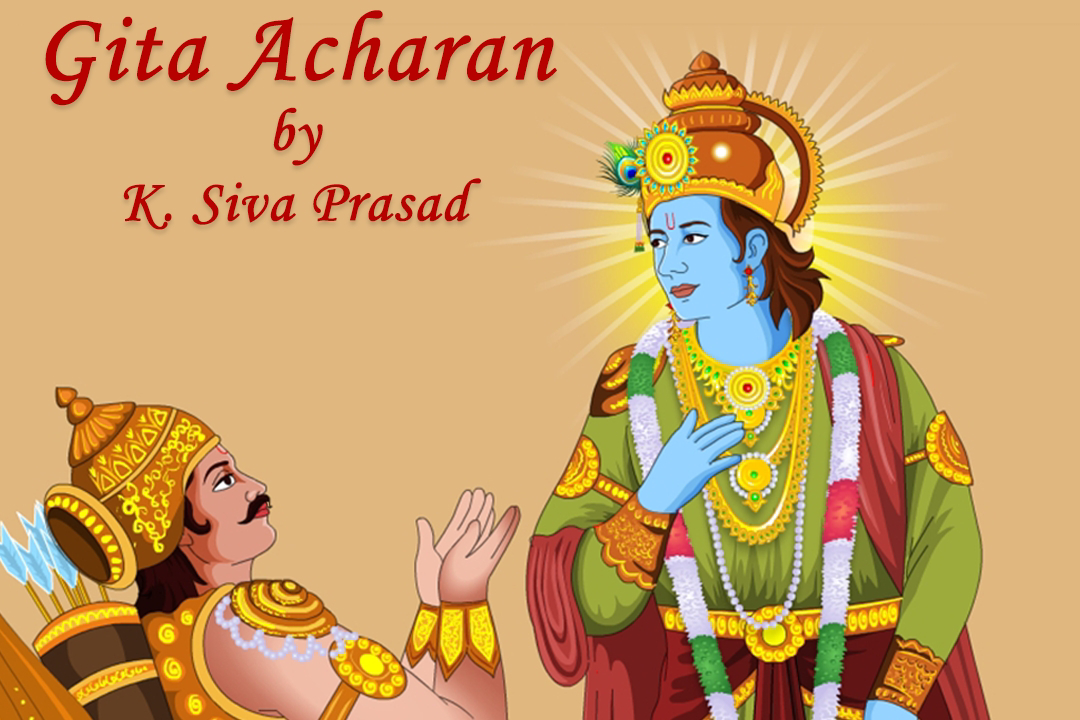
Krishna shows Arjuna a glimpse of the future where the
warriors are entering the mouth of death and says that Arjuna is merely a nimitta-maatra
(an instrument in His hand). Krishna further clarifies that even without Arjuna,
none of them will survive and hence he should fight without stress.
The journey from ‘senses centred’ ahankaar to ‘Paramatma centred’
nimitta-maatra is a tough one. The natural questions are, how to achieve
it and what are the indicators of progress.
Nimitta-maatra is an internal state, not a skill that can be mastered.
One easy way to attain it is to have clear visuals of inevitable death, as Arjuna
had, which is called memento mori. Secondly, painful (helpless and miserable)
situations can give us glimpses of nimitta-maatra, but the pleasure
(success or victory) situations can give us a long lasting one especially when
used with awareness and gratitude.
Nimitta-maatra is the most effective antidote to ahankaar,
the sense of personal doership. In this state, Paramatma is recognised
as the doer of all actions, while we see ourselves only as instruments through
which they are performed.
Krishna earlier indicated that He is
the brilliance (10.41) and it is realising that the internal state of nimitta-maatra
manifests as brilliance in the outer world as the universe bestows nimitta-maatra.
This
state enables us to perceive situations without the filters of bias, belief, or
judgement, and to act without the burden of the past or expectations about the
future or from others.
When we repeatedly, clearly, and firmly receive the answer “No” to the
question, “Will our absence make any difference to this mighty existence?”,
we are firmly on the path of becoming nimitta-maatra.
It is not about what we do or what we choose irrespective of how noble it
might appear. On
the journey towards becoming a nimitta-maatra, our progress is
determined by the extent of karma bandhan generated by our
actions and choices - the lesser the bondage, the greater the progress.


Comments
Post a Comment