187. Hook is hidden behind Bait
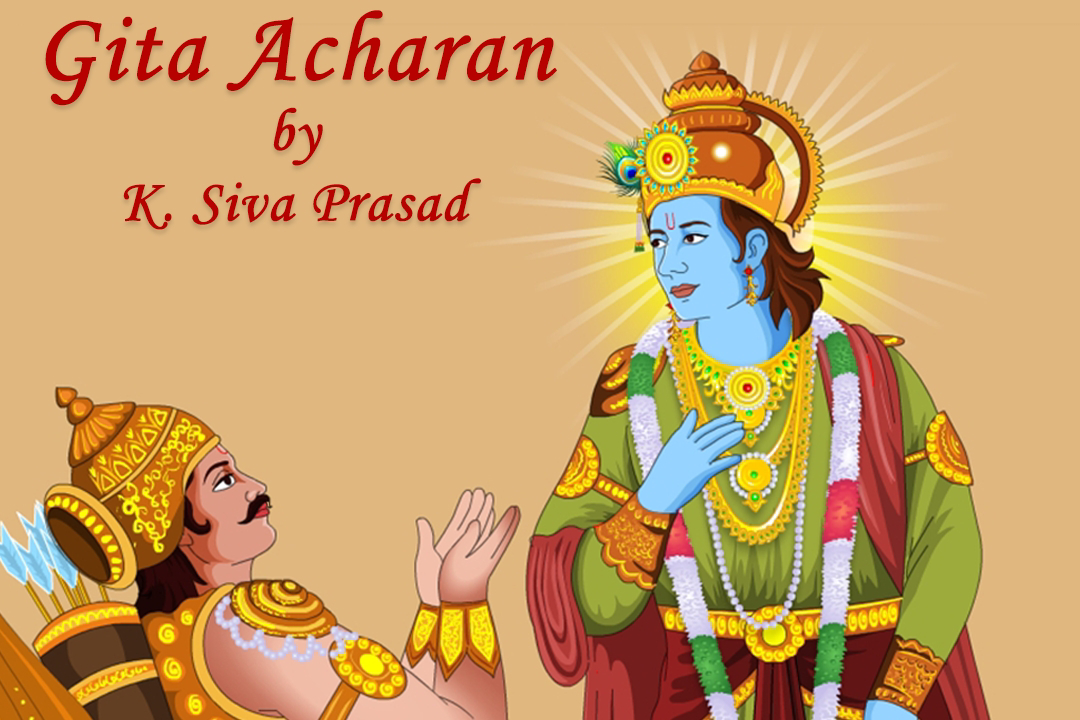
Krishna says, “He who neither rejoices nor hates, nor
grieves, nor desires, renouncer of good and evil, alike to friend and foe; to
honour and dishonour, alike to experiences of warmth and chill, to pleasure (sukh)
and suffering (dukh), free from attachment, he who is full of devotion is
dear to me” (12.17 and 12.18). Essentially, it is witnessing these feelings and
emotions rather than identifying with them.
A newborn is a ‘universal baby’ with many free neurons in the brain to take
care of basic requirements and future challenges. During formative years, many
neural patterns are formed based on upbringing, family, society etc. These
patterns label external situations and people as either good or bad. Krishna earlier said that, endowed with wisdom,
one sheds both good and bad deeds (2.50). This suggests that when we attain the
yoga of equanimity, the habit of labelling disappears, as the neural
patterns that create these distinctions are broken. The same is reflected here when Krishna says that those devotees are dear
to Him who dropped these divisions. Once these are dropped, there is neither
honour (praise) nor dishonour (criticism), and one experiences warmth and chill
alike.
Krishna earlier said that sthita-prajna (stoic) is the one who is
neither excited by sukh nor agitated by dukh and is free from raag
(attachment) (2.56). All of us seek pleasure but suffering inevitably comes to
our lives as both of them exist in pairs of dwandwa (polarities). This
is like bait to fish where the hook is hidden behind the bait. Life experiences
give us awareness that when we seek one, the other is bound to follow - maybe
in a different shape and after a lapse of time. This awareness helps us
transcend polarities and attain the state of equanimity (samatva). It’s
like being an artist in a drama who displays intense emotions but doesn’t get
attached to them.


Comments
Post a Comment