200. Soul Illuminates the Body
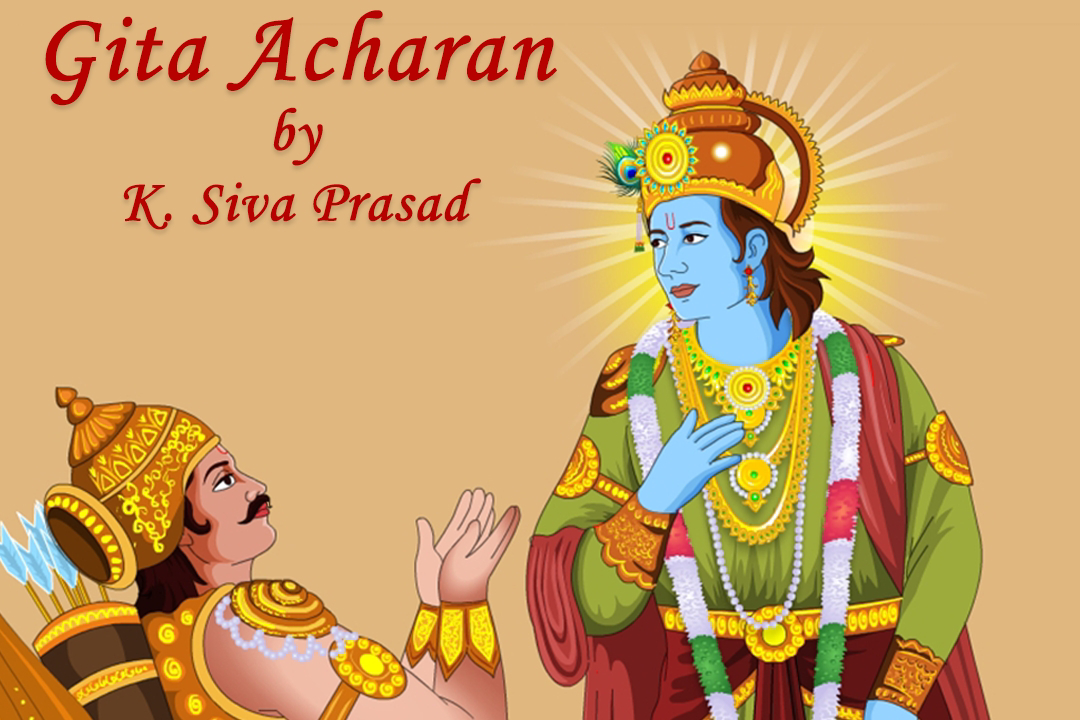
Krishna says, “Just as one Sun illuminates the entire
solar system, the individual soul illuminates the entire body” (13.34). The
soul is needed to bring life to the body which is like electricity bringing
life to appliances.
The thirteenth chapter of the Gita is titled ‘Kshetra (field) Kshetrajna
(knower of field) Vibhag Yoga’ where Krishna clarifies that the physical
body is called kshetra whose attributes include ahankaar (I am
doer), intellect (buddhi), mind, ten senses, five objects of the senses,
desire, hatred, pleasure, pain, material body and consciousness (chetana).
The knower of kshetra is called kshetrajna.
Krishna mentions about twenty aspects of knowledge, and he keeps humility
at the beginning indicating that it is a virtue rather than a weakness. Other
aspects of knowledge include forgiveness, self-control, dispassion (vairagya)
towards sense-objects, absence of ahankaar, non-attachment and eternal
equanimity towards desirable and undesirable circumstances. Krishna further
explains about the object of this knowledge. One enjoys immortality once one
attains ‘That’ which is to be known. It is neither existent (sat) nor
nonexistent (asat) and dwells in the world enveloping all. He gives a
path to attain ‘That’ through meditation (dhyan), awareness, karma
or listening to the saints.
Krishna talks about prakriti (nature) which
is responsible for cause-and-effect; and purush (spirit) who
is responsible for the experience of sukh (pleasure) and dukh
(pain) through subjective interpretation. Both are anaadi
(beginningless).
Krishna concludes the thirteenth chapter of the Bhagavad Gita and says,
“Those who perceive with the eyes of knowledge - the difference between the kshetra
and the kshetrajna, and the process of prakriti moksham (ultimate
freedom from nature), attain the param (supreme)” (13.35). This is an
assurance from Lord Krishna that we reach the eternal state once we attain
existential understanding of kshetra and kshetrajna.


Comments
Post a Comment