258. Sins and Suffering

One of the common fears of humanity is about committing
sins (paap). Every culture has evolved around the concept of sin, and
the common belief is that all our suffering is due to sins committed in this
life or previous ones. Religions thrive on our guilt of committing sins. Even Arjuna’s
despondency is because of his belief that he will incur sin by slaying his
elders, teachers and relatives. That’s why Krishna elaborates on this issue on
various occasions in the Bhagavad Gita.
Firstly, Paramatma takes no account of anyone’s virtue or sin. It is
the problem of human beings who are deluded as their knowledge is covered by moha
(delusion or ignorance) (5.15). Secondly, one hoping for nothing, with a
controlled mind and body, doing mere bodily actions, incurs no sin (4.21). Even
if we are the most sinful of sinners, we shall safely cross the sea of sin by
the raft of wisdom (4.36). The wisdom is realising ‘That’ by which we will see
all beings in the self (4.35).
Thirdly, for karma yogi, no sin would be committed if karma
is performed by treating pleasure-pain; gain-loss; and victory-defeat with
equipoise (2.38). Krishna calls this equanimity as parama bhakti
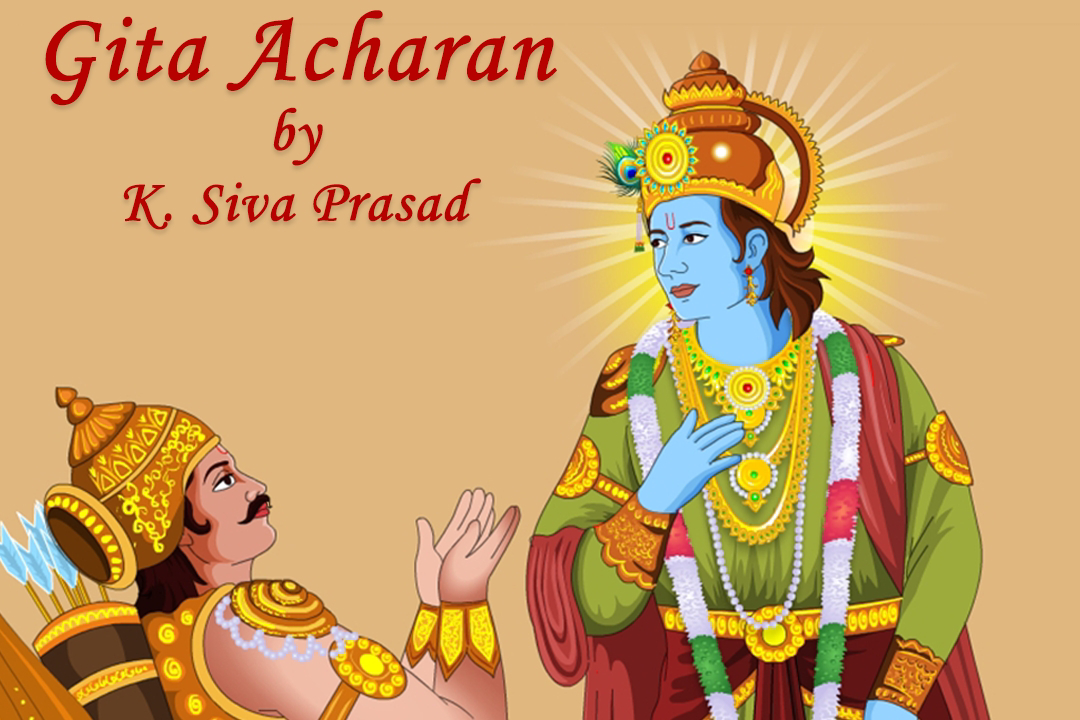
(supreme devotion) (18.54). Finally, Krishna says, “Abandon all dharmas
and take refuge in Me alone. I will liberate you from all sins, grieve not”
(18.66).
While learning
addition, a child may say that two plus two equals five and this cannot be
termed a sin - it is simply ignorance. Similarly, what we call sin is merely an
ignorant action arising when knowledge is veiled by moha (delusion). One
way to remove this ignorance is to light a candle of wisdom and another path is
taking refuge in Paramatma. Suffering disappears once this is realised.


Comments
Post a Comment