94. Art of Learning
The ability to learn throughout life is a human endowment.
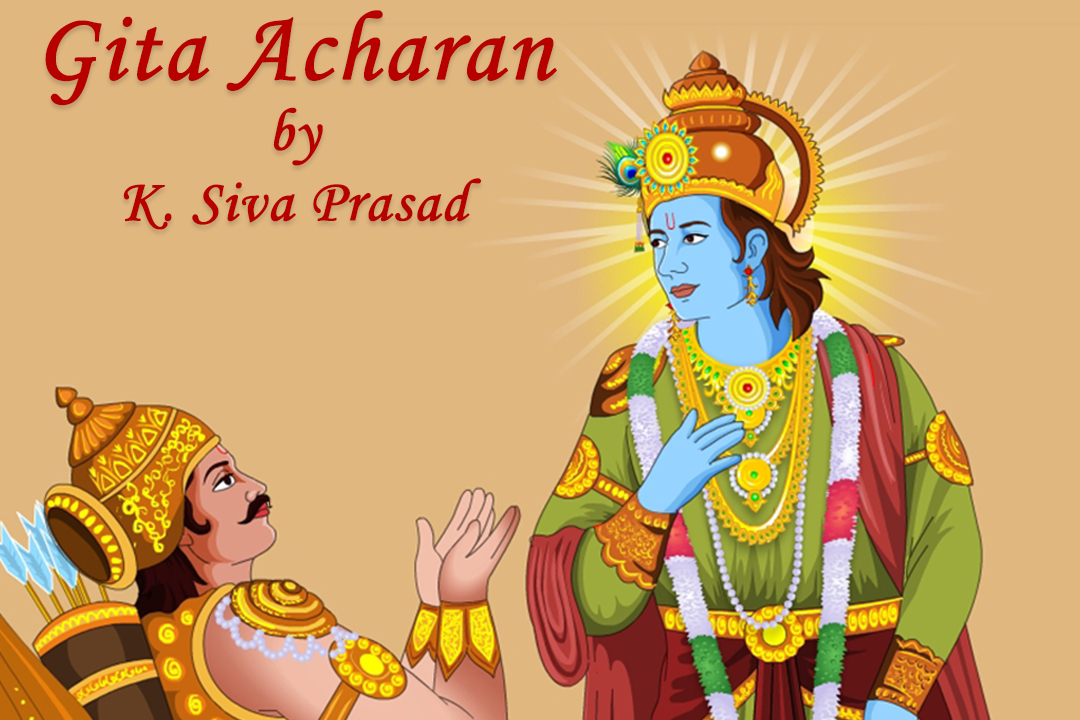
The fundamental question is how to learn and what to learn. Krishna says, “Know
‘Tat’ (That) by prostration, questioning and service, the wise who have
realised the truth will teach you the knowledge” (4.34). ‘Tat’ is also
interpreted as the ‘All’, the All-pervading Reality. Krishna is giving a path
to realise ‘Tat’.
Prostration is humility, humbleness, willingness to understand others’
points of view and open-mindedness which is an indication of overcoming our ahankaar.
Questioning is a kind of feedback loop of electronic circuits where we question
everything, we say and do till questions drop. Service is compassion.
The next question is who is realised guru and how to find them. In Srimad
Bhagavatam, Krishna refers to a wise man who says that he has 24 gurus
and learnt pardoning from the Earth; innocence from a child; detachment from
air; avoiding hoarding from honeybees; Equanimity from the Sun; traps of senses
from fish; and the list is endless. This implies that the guru is just
around as long as the three qualities for learning are present within us.
Krishna clarifies about ‘What to learn’ when he says, “Knowing which you
shall not again get deluded thus, by which you will see all beings in the self,
and also in Me” (4.35). This verse is also quoted as “Know ‘That’ by knowing
which nothing is left to know”. Certainly, it is not reading all the books in
the world. Krishna makes it simple when he says it is ‘That’ by which we will
see all beings and the Lord in ourselves.
We often praise our virtues while being critical of other’s shortcomings. This
verse says that in the same vein we should realise that we too have those shortcomings
in us and others too have virtues. Finally, it’s the Lord everywhere. Once this
simple thing is realised there is no scope for delusion.


Comments
Post a Comment