Posts

Showing posts with the label darkness of delusion

103. Roots of Virtue and Sin
Image
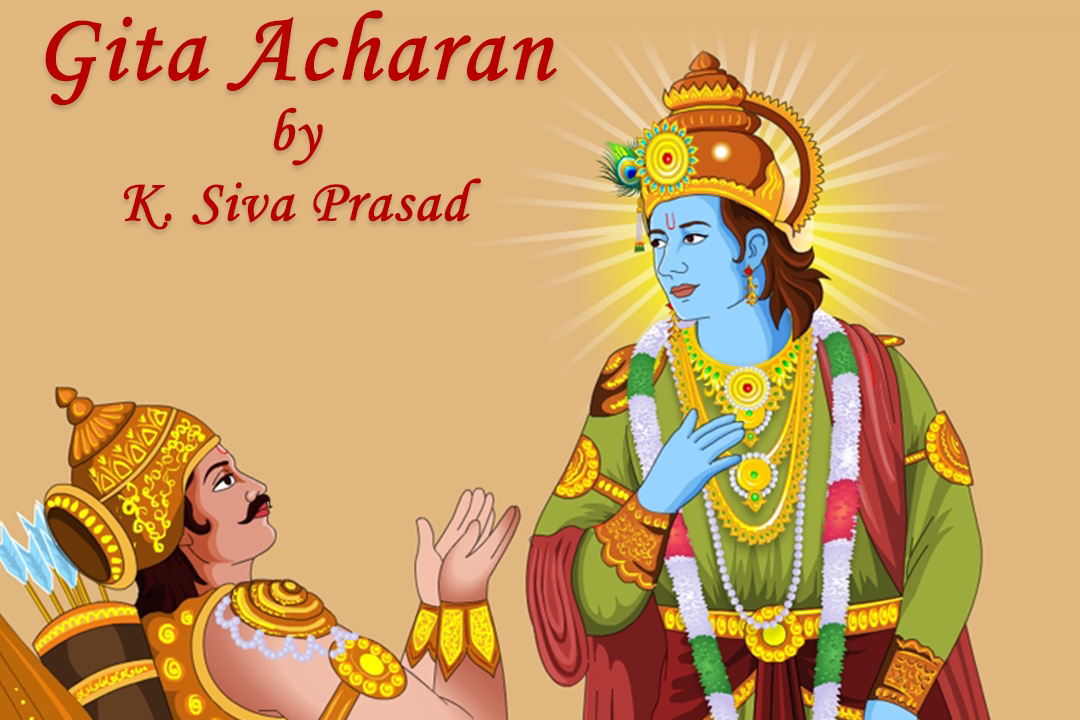
K rishna says that the Prabhu (Lord) creates neither doership nor actions nor union with the fruits of action for the world. The delusive cosmic nature is the originator of all these (5.14). The Lord is not a karta (doer) but a Srishta (Creator or creativity). There are two types of creations. One is like a potter who creates pottery and the creation (pot) gets separated from the Creator for independent existence. Another is like a dancer who is creating dance, but dance (creation) won’t be there in the absence of the dancer. The Lord is like a dancer where the entire universe is dependent on Him, but he is not dependent on it. That’s why dancing Shiva is depicted as Nataraj and musician Krishna as Murari . The Lord can also be seen as a catalyst in a chemical reaction where the presence of a catalyst makes the chemical reaction happen. The catalyst itself doesn’t undergo any change. Krishna further says that the All-pervading takes no account of anyone’s virtue o...
44. What is Ours and What is Not

Image
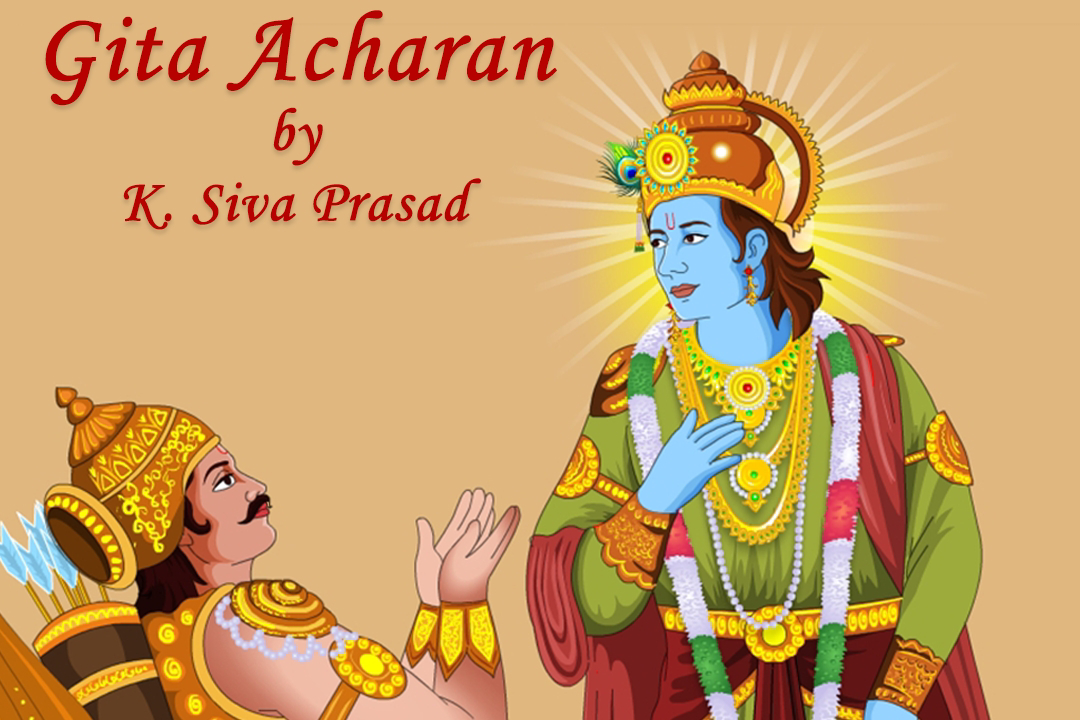
K rishna says that when we overcome moha-kalilam (darkness of delusion) using intellect, we become indifferent to what is being heard or will be heard (2.52). This implies that when we overcome moha , the inputs brought by our senses will lose the power to influence us at will. Krishna chose ‘hearing’ as the metaphor here as we are frequently influenced by the words of others- both praise and criticism. Like ahankaar , it is difficult to describe moha due to the absence of suitable words. It is our inability to distinguish between what is ours and what is not. It is the feeling of ownership over physical possessions, though in truth we are not their real owners. While we try to cling to what is not ours, we don’t have a clue about what truly is ours i.e. dehi or atma (soul). Krishna calls this phenomenon ‘ kalilam ’ or spiritual darkness. Krishna further says that when we overcome this darkness we attain ‘ nirvedam ’. Though nirvedam is described as indifference, it...