177. Grace in Relationships
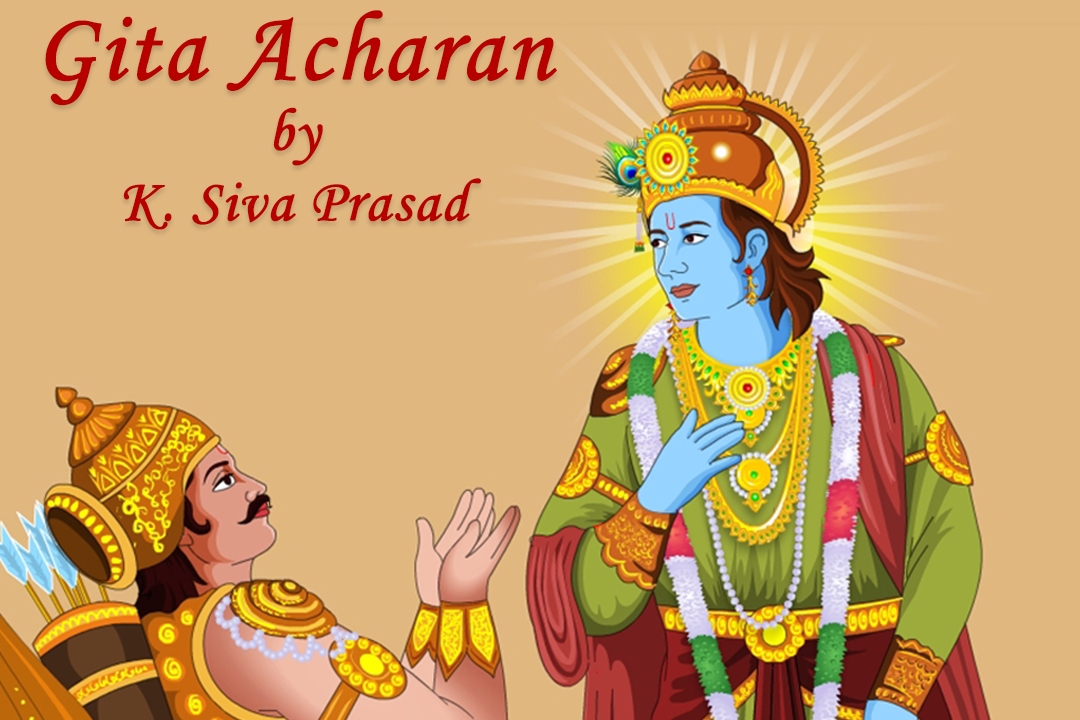
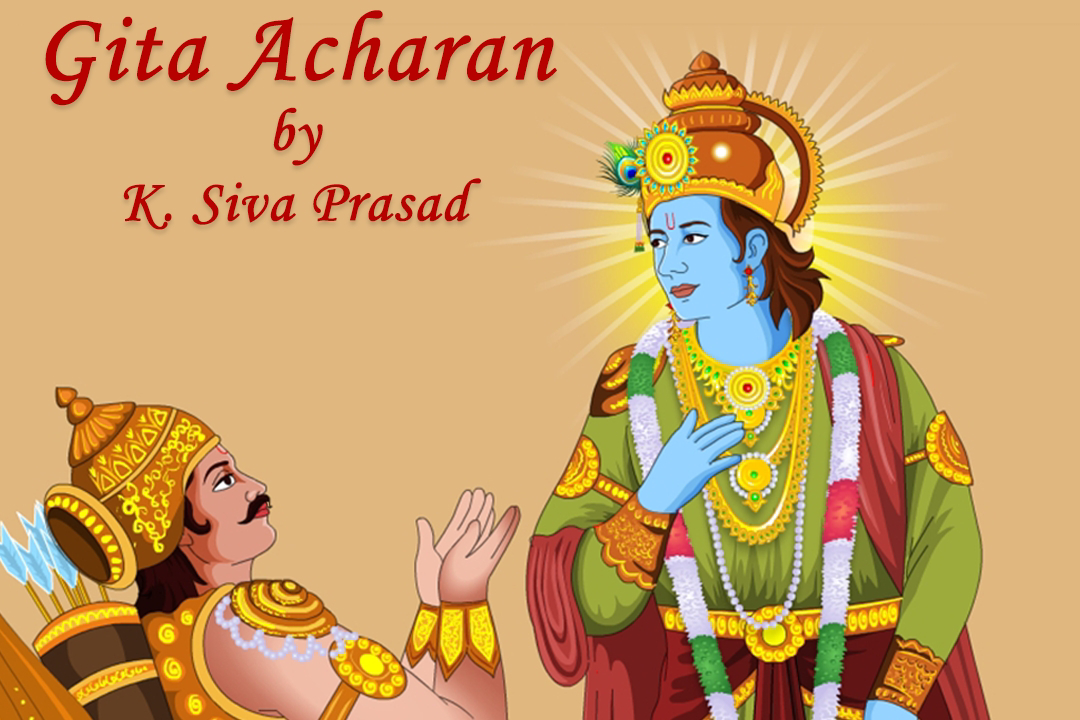
Trembling, saluting with joined palms, bowing, overwhelmed
with fear (11.35), Arjuna says, “The world is delighted and rejoices in your
praise; rakshasas (demons) flee in terror and siddhas (perfected
ones) bow (11.36) as you are the primal cause even to Brahma, Lord of
Gods, Abode of the universe. You are the imperishable, the being and non-being,
that which is supreme (11.37). You are the knower, the object of knowledge, and
the Supreme Goal. By You is the universe pervaded, Being of infinite forms”
(11.38).
Arjuna further says that He is Vayu (wind), Yama (God of
death), Agni (fire), and Varuna (sea god) (11.39); and offers
salutations (11.40). He continues, “You are the father of this world, of the
moving and unmoving, greater than the greatest, none equal to you” (11.43).
Arjuna bows, prostrates and seeks His grace as a son from father; a lover from
a beloved; a friend with a friend (11.44). Arjuna is delighted to see what had
never been seen before, and at the same time, his mind is filled with fear and
seeks mercy (11.45). He prays to see Krishna in his earlier form (11.46).
While Arjuna refers to three types of relationships: that of a father and
son, a friend and friend, and a lover and the beloved, grace is needed for any
healthy relationship, and all cultures advocate the same. Grace
is essential for long-lasting relationships. Contemporary
literature guides us in this direction, especially in the context of marriage
and family. Grace is the ability to forgive others in relationships, realising
that we too can make similar mistakes as others and have compassion towards
others. This comes when equanimity is inculcated at deeper levels; when we
transcend dualities of praise and criticism; when we see ourselves in others
and others in ourselves which helps us embrace differences.


Comments
Post a Comment