201. Mother and Father
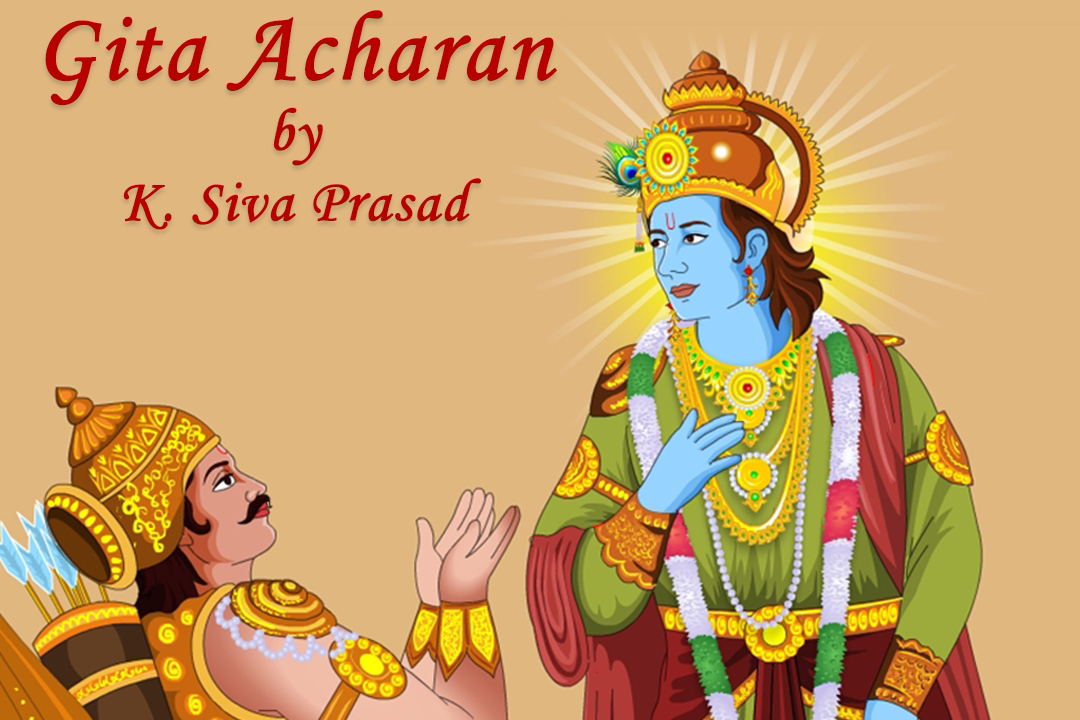
The fourteenth chapter of the Bhagavad Gita is titled ‘Guna
Traya Vibhag Yoga’ - Union through transcending the gunas. This
flows from the earlier description of prakriti. In this chapter, Krishna
explains in depth about the gunas (characters born of prakriti)
and how to transcend them by attaining wisdom.
Krishna says, “Again I shall speak about that highest wisdom which
transcends all knowledge. With this wisdom, all sages at the end of life have
attained the final perfection (14.1). Embracing this wisdom, established in My
Being, sages are not reborn even at the start of a new cycle of creation, nor
are they troubled at the time of pralay (universal dissolution)” (14.2).
Firstly, Krishna says I will explain again, indicating the repetition of
what he had revealed earlier. It is often said that repetition is the key to
mastery. For example, though the contents of a book are the same, subsequent
readings enhance our understanding. This happens because of our improved
ability to absorb with each reading. Secondly, it was a live conversation
between Krishna and Arjuna. Whenever Krishna finds that Arjuna doesn’t
understand something, He repeats it out of compassion.
Krishna further says, “My womb is the mahat-Brahma (great prakriti)
into which I place the beej (seed); this is the cause of the birth of
all beings (14.3). Whatever forms are produced in all wombs, prakriti is
their womb (mother), and I am the seed giving Father” (14.4).
Prakriti is the mother of creations and Paramatma is the
father. A small part (seed) of Paramatma called atma is given to prakriti
to enable individual life forms to flourish. The seed symbolises growth which
is at the heart of the evolution of a variety of life forms. Krishna earlier asked
us to see ourselves in others, others in ourselves, and finally see Him
everywhere, because all beings are His ‘seeds’.


Comments
Post a Comment